Maps of God
Exploring the Sacred Geometry of Kabbalistic Wisdom
Discover the mystical world of Ilanot - intricate manuscript diagrams that map the divine realm through centuries of Jewish mystical tradition.
Discover Sacred Knowledge
Advanced Research Tools
Utilize cutting-edge digital humanities approaches to explore kabbalistic manuscripts with unprecedented depth and precision.
Rare Manuscripts
Access digitized versions of precious kabbalistic diagrams, preserved and presented in high-resolution detail for scholarly study.
Interactive Analysis
Explore manuscripts with interactive mapping tools, searchable content, and linked-data connections between related texts.
Featured Manuscripts
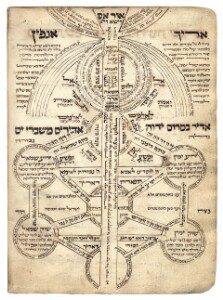
Library of the Emanuel Ringelblum Jewish Historical Institute, Ms. 293
ID: https://ilanot.org/resource/item/diagram_00263
This seventeenth-century witness, formerly preserved in the Jewish Historical Institute in Warsaw, served as the master copy of Ḥayyim Vital’s Oẓrot …

Oxford (England), The Bodleian Libraries, University of Oxford: Ms. Hunt. Add. D
ID: https://ilanot.org/resource/item/diagram_00269
This mid-seventeenth-century Great Tree is preserved as a paper foldout in the front matter of an Ashkenazi kabbalistic miscellany. The ilan precedes…

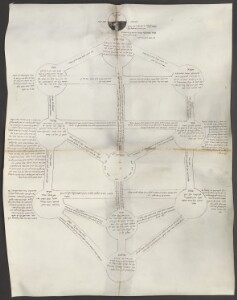
Munich (Germany), Bavarian State Library: Cod.hebr. 448
ID: https://ilanot.org/resource/item/diagram_00291
Cod. hebr. 448 is a single parchment sheet classical ilan. According to Maximilian de Molière, it was likely copied by Francesco Parnas for Johann Al…
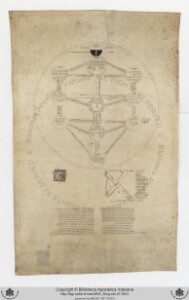
Vatican City, BAV, MS Vat.ebr. Borg.ebr. 21
ID: https://ilanot.org/resource/item/diagram_00303
This is an Italian copy of a Small Parchment, a type of classical ilan that goes back to the fourteenth century. The fact that it was copied in the s…
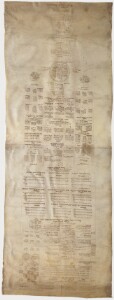
Jerusalem, The National Library of Israel: Ms. Heb. 9795=4
ID: https://ilanot.org/resource/item/diagram_00307
This ilan, copied around 1700 by a scribe of German or Bohemian origin, is one of only two known copies that exclusively preserve Meir Poppers’ origi…

Jerusalem, The National Library of Israel: Ms. Heb. 9810=4
ID: https://ilanot.org/resource/item/diagram_00305
The graphical distinctiveness of this elegant paper ilan is in the precise, distinctive micrography that establish the facial features of Adam Kadmon…
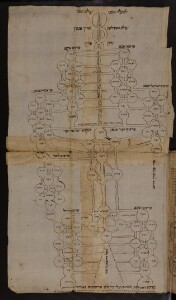
Moscow, The Russian State Library: Ms. Guenzburg 53 p. 206
ID: https://ilanot.org/resource/item/diagram_00308
This ilan is a significant witness to Jacob Ẓemaḥ’s "Ilan of the Enrobings". Found within a copy of Ḥayyim Vital’s “Oẓrot Ḥayyim”, the diagram presen…
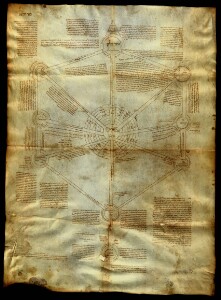
Brescia - Biblioteca Queriniana - MS L FI 11
ID: https://ilanot.org/resource/item/diagram_00326
The Brescia parchment was likely written by a Spanish scribe around the late fourteenth century. The text has been attributed to Rabbi Joseph Gikatil…

Amsterdam, Ets Haim Library: 47 E 53
ID: https://ilanot.org/resource/item/diagram_00323
This highly artistic ilan in the collection of the Ets Haim Library in Amsterdam is a rare complete rotulus belonging to the KPaZP7 family of Great T…

Jerusalem, The National Library of Israel: Ms. Heb. 9787=4
ID: https://ilanot.org/resource/item/diagram_00311
This ilan, whose author is unknown, is labelled “The Ilan of Holiness” in the title above the Keter of Adam Kadmon, and it is the smallest among the …

Cincinnati, Hebrew Union College: Scrolls 69
ID: https://ilanot.org/resource/item/diagram_00315
The Grupa Ilan, a Great Tree of type KPaZP7, is the earliest known Great Tree to reach us that begins with the first four frames of Knorr’s original …

Jerusalem, The National Library of Israel: Ms. Heb. 9790=4
ID: https://ilanot.org/resource/item/diagram_00319
This rotulus is a (non-autograph) copy of Coppio's ilan and opens with the phrase “Said the compiler […] of blessed memory.” Like its source, it is a…

Jerusalem (Israel), IM: B50.02.1945; 180/40
ID: https://ilanot.org/resource/item/diagram_00332
This parchment rotulus, dating to the late eighteenth or early nineteenth century and preserved in the Israel Museum, is a sui generis masterpiece of…
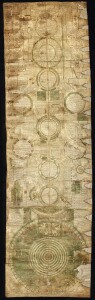
Cincinnati (USA), Hebrew Union College, Klau Library: Scrolls 65.1
ID: https://ilanot.org/resource/item/diagram_00342
Cincinnati, HUC, Klau Library, Scrolls 65.1 appears to be the earliest witness of a family of large manuscript rotuli ("ilanot") to which we have giv…
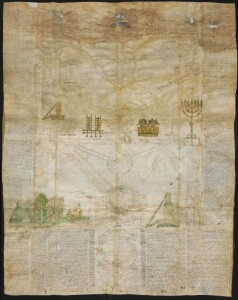
Florence (Italy), Biblioteca Medicea Laurenziana: Plut.44.18
ID: https://ilanot.org/resource/item/diagram_00343
Created in 1533, this imposing, squarish ilan is a unique collaboration between Elijah Menaḥem Ḥalfan and Abraham Ṣarfati, who acted as its designers…

Jerusalem (Israel), The National Library of Israel: Ms. Heb. 1257=4
ID: https://ilanot.org/resource/item/diagram_00346
This ilan was crafted by R. Joshua ben David (active early-seventeenth-century), a student of R. Samuel Barzani, the preeminent rabbinic scholar of K…

Jerusalem (Israel), The National Library of Israel: Ms. Heb. 200.4=4
ID: https://ilanot.org/resource/item/diagram_00373
This Great Tree serves as the closest extant parallel to the lost ilan of R. Kalonymus Kalman. It is distinguished by its striking anthropomorphic pl…

Cambridge (England), Trinity College Library: Scroll F.11.18
ID: https://ilanot.org/resource/item/diagram_00340
This ilan makes a striking visual impression, beginning with an anthropomorphic head of Adam Kadmon and concluding with an elegant engraving of Jerus…

Jerusalem (Israel ), The National Library of Israel: 4=9800
ID: https://ilanot.org/resource/item/diagram_00384
The graphical distinctiveness of this elegant paper ilan is in the precise, distinctive micrography that establish the facial features of Adam Kadmon…
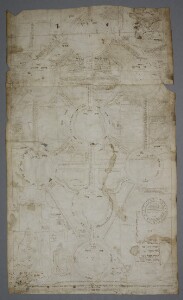
Leeds (England), Leeds University Library: Ms. 418
ID: https://ilanot.org/resource/item/diagram_00353
This ilan preserves a fragment of a family of large manuscript rotuli to which we have given the name "The Magnificent Parchment." The fascinating fr…
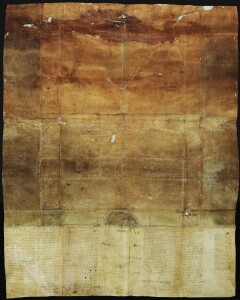
Florence (Italy), Biblioteca Medicea Laurenziana: Plut.44.18 (Verso)
ID: https://ilanot.org/resource/item/diagram_00344
Created in 1533, this imposing, squarish ilan is a unique collaboration between Elijah Menaḥem Ḥalfan and Abraham Ṣarfati, who acted as its designers…

Jerusalem (Israel), The National Library of Israel: Ms. Heb. 9808=4
ID: https://ilanot.org/resource/item/diagram_00329
A Great Tree of the KPrZW type. This first printed Lurianic ilan is true to its source (NLI, Ms. Heb. 4°9799) with the addition of an approbation wri…
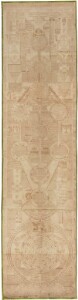
Tel Aviv and London (Israel and England), Private collection
ID: https://ilanot.org/resource/item/diagram_00363
This manuscript, now in an anonymous private collection, is an early and well-preserved paper copy of the family of ilanot known as "The Magnificent …
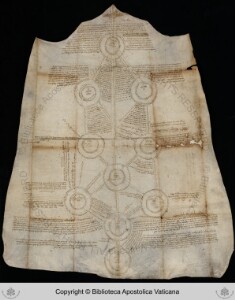
Vatican City (Vatican City State), Vatican Library: Ms. ebr. 530 III - Recto
ID: https://ilanot.org/resource/item/diagram_00367
The striking ilan preserved in the Vatican library exhibits a top edge cut in a manner that retains the natural contours of the animal skin while sug…

Jerusalem (Israel), The National Library of Israel: Ms. Heb. 9789=4
ID: https://ilanot.org/resource/item/diagram_00378
This ilan, an autograph in Isaac Coppio's hand that includes a colophon dating it to the unlikely year 5348/1588, may have been created by Coppio dur…

Jerusalem (Israel), The National Library of Israel: Ms. Heb. 9791=4
ID: https://ilanot.org/resource/item/diagram_00348
A Great Tree of the KPZWy type. This ilan was created in Eastern Europe in the late 18th century. The ilan was executed with stylistic precision and …

Jerusalem (Israel), The National Library of Israel: Ms. Heb. 9804=4
ID: https://ilanot.org/resource/item/diagram_00386
This enigmatic ilan is distinguished principally for having preserved the work-in-progress of its copyist. It is not merely unfinished, though; it se…
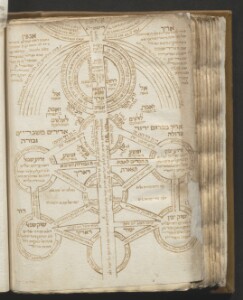
Mantua (Italy), Jewish Community of Mantua: Ms. ebr. 108
ID: https://ilanot.org/resource/item/diagram_00389

Jerusalem (Israel), The National Library of Israel: Ms. Heb. 9799=4
ID: https://ilanot.org/resource/item/diagram_00381
The word “ilan” at this ilan's head features decorated large letters with floral ornaments. The figures of Adam Kadmon, Arikh Anpin, and Zeir Anpin a…

New York (USA), Jewish Theological Seminary, Jewish Theological Seminary Library: Ms. 436
ID: https://ilanot.org/resource/item/diagram_00394
This Great Tree rotulus was copied by David Montpellier in London in 1663. The manuscript features a dating verse from the Torah portion Ekev, which …

Brooklyn (USA), Agudas Chassidei Chabad, Library of Agudas Chassidei Chabad: Megillah 4902 ל
ID: https://ilanot.org/resource/item/diagram_00398
This late eighteenth-century Great Tree rotulus presents the Poppers (P) and Zacuto-Zemah (Z) modules sequentially. The upper three-quarters of the p…

St. Petersburg (Russia), Russian Museum of Ethnography: inv. no. 6396-101
ID: https://ilanot.org/resource/item/diagram_00402
This imposing Hasidic Great Tree of the VPaZW type was collected by S. An-sky during his ethnographic expedition to Volhynia and Podolia between 1912…
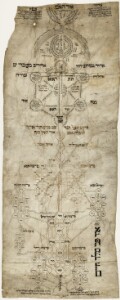
Jerusalem (Israel), Meir Benayahu Collection
ID: https://ilanot.org/resource/item/diagram_00407
This seventeenth-century Zacuto-Ẓemaḥ (Z) ilan, preserved in the Meir Benayahu Collection in Jerusalem, represents a seminal stage in the evolution o…

Jerusalem (Israel), The National Library of Israel: Ms. Heb. 9812=4
ID: https://ilanot.org/resource/item/diagram_00413
An ilan amulet based on the PaZW model, in the style of Jerusalem, NLI, Ms. Heb. 4=9805. This ilan features significant textual additions, particular…

Jerusalem (Israel), The National Library of Israel: Ms. Heb. 963=8
ID: https://ilanot.org/resource/item/diagram_00351
A Great Tree of the PaZP7 type, produced in Ashkenaz in the late eighteenth century. This specific modular configuration consists of an abridged vers…
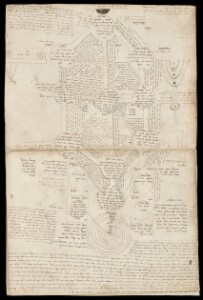
Munich (Germany), Bavarian State Library: Cod.hebr. 119
ID: https://ilanot.org/resource/item/diagram_00358
The classical parchment behind This ilan, drafted in semicursive script by an Italian scribe ca. 1500, is easily discerned. A sefirotic tree dominate…

Jerusalem (Israel), The National Library of Israel: Ms. Heb. 9788=4
ID: https://ilanot.org/resource/item/diagram_00376
This goatskin ilan amulet was likely created in Jerusalem by the scribe Nissim Sejera and is an abridged adaptation of Isaac Coppio's two column ilan…

Berkeley (United States), Magnes Collection: acc. no. 67.1.11.3
ID: https://ilanot.org/resource/item/diagram_00416
This seventeenth-century parchment is one of only two known extant copies of the pure Poppers (P) module in its original form. Signed by the scribe B…
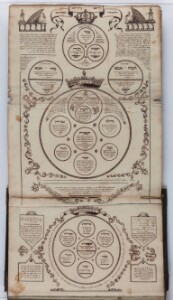
Prague (Czechia), Jewish Museum: Ms. 69
ID: https://ilanot.org/resource/item/diagram_00423
This 1730 luxury paper foldout, preserved in the Jewish Museum in Prague (Prague, Jewish Museum, Ms. 69), is a mature and richly illustrated witness …

Oxford (United Kingdom), University of Oxford, The Bodleian Libraries: Ms. Opp. 458
ID: https://ilanot.org/resource/item/diagram_00432
This seventeenth-century Ashkenazi kabbalistic miscellany is a document of exceptional historical significance, as it served as the primary source fo…
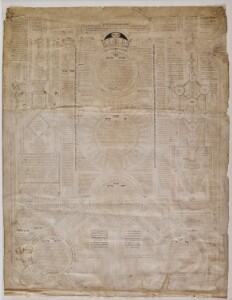
New York (USA), Jewish Theological Seminary , Jewish Theological Seminary Library: B K105
ID: https://ilanot.org/resource/item/diagram_00360
New York, JTS, Ms. K105 is a fragment of a very well-executed manuscript belonging to a family of ilanot manuscripts known as "The Magnificent Parchm…
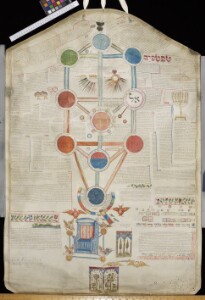
Oxford (England), The Bodleian Libraries, University of Oxford: Ms. Hunt. Add. E
ID: https://ilanot.org/resource/item/diagram_00361
Early in the sixteenth century, an old copy of the “Great Parchment” was acquired by the Italian humanist and philosopher Cardinal Egidio da Viterbo …
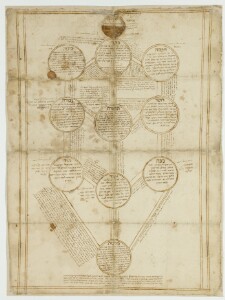
Jerusalem (Israel), The National Library of Israel: Ms. Heb. 9792=4
ID: https://ilanot.org/resource/item/diagram_00365
This seventeenth-century Italian copy of a classical ilan that goes back to the fourteenth century demonstrates the ongoing relevance of such artifac…
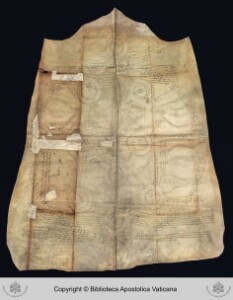
Vatican City (Vatican City State), Vatican Library: Ms. ebr. 530 III - Verso
ID: https://ilanot.org/resource/item/diagram_00368
The striking ilan preserved in the Vatican library exhibits a top edge cut in a manner that retains the natural contours of the animal skin while sug…
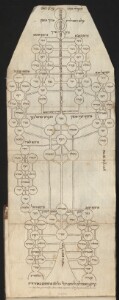
Mantova (Italy), Jewish Community of Mantua: Ms. ebr. 51
ID: https://ilanot.org/resource/item/diagram_00392
New York (USA), Jewish Theological Seminary , Jewish Theological Seminary Library: B K104
ID: https://ilanot.org/resource/item/diagram_00396
Oxford (England), The Bodleian Libraries, University of Oxford: Ms. Opp. 128
ID: https://ilanot.org/resource/item/diagram_00400
This mid-seventeenth-century Great Tree is preserved as a paper foldout in the front matter of an Ashkenazi kabbalistic miscellany. The ilan precedes…
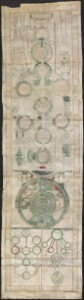
Uppsala (Sweden), Uppsala University, Uppsala University Library: O Hebr. 33:3
ID: https://ilanot.org/resource/item/diagram_00404
This extraordinary Magnificent Parchment was donated to the Uppsala University Library in 1705 by Nicolas Bergius (1658-1706). The first mention of t…

Jerusalem (Israel), National Library of Israel: Ms. Heb. 4=9794
ID: https://ilanot.org/resource/item/diagram_00411
This ilan is a slightly modified copy of the original Meir Poppers ilan. Were it a component in a Great Tree, it would be classified as type “Pu.” Th…
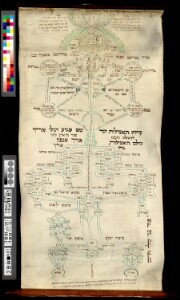
Munich (Germany), Bayerische Staatsbibliothek: Cod.hebr. 449
ID: https://ilanot.org/resource/item/diagram_00419
This seventeenth-century Ashkenazi rotulus is a seminal witness of the Zacuto-Ẓemaḥ (Z) type. It is of particular historical significance as it bears…
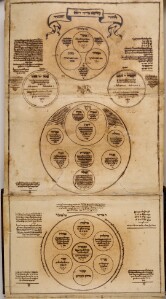
Tel Aviv (Israel), Gross, William L.: Ms. GR.011.012
ID: https://ilanot.org/resource/item/diagram_00425
Copy of ‘Eẓ Ḥayyim by Ḥayyim ben Joseph Vital produced in 1729, richly decorated and including a fold-out “Ilan of Expanded Names” (N) sewn at the ba…
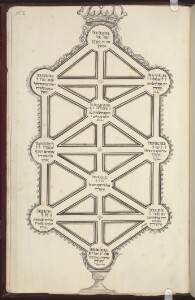
Uppsala (Sweden), University Library: 27
ID: https://ilanot.org/resource/item/diagram_00428

Jerusalem (Israel), National Library of Israel: Ms. Heb. 4=9797
ID: https://ilanot.org/resource/item/diagram_00435
This beautifully executed rotulus features a unique, seemingly apologetic subtitle: Dimyon (likeness). This disclaimer is boldly inscribed directly a…

Jerusalem (Israel), National Library of Israel: Ms. Heb. 4=9819
ID: https://ilanot.org/resource/item/diagram_00370
This Shandukh ilan, which is over ten meters long, opens with a unique, complex sequence of miniature arboreal diagrams that, taken together, are mea…

Warsaw (Poland), Library of the Emanuel Ringelblum Jewish Historical Institute : Ms. 155
ID: https://ilanot.org/resource/item/diagram_00439
The Small Parchment preserved in Warsaw, Emanuel Ringelblum Jewish Historical Institute MS 155 (now lost) is a fifteenth-century Italian witness to a…

Jerusalem (Israel), The National Library of Israel: Ms. Heb. 4=9822
ID: https://ilanot.org/resource/item/diagram_00443
This uniquely structured Great Tree was created by Joseph Siprut de Gabay in Amsterdam around 1734. Gabay made three such ilanot: a second is also he…
London (England), The British Library: Or. 6465
ID: https://ilanot.org/resource/item/diagram_00445
This is a well-preserved witness of the family of large manuscript rotuli ("ilanot") to which we have given the name "The Magnificent Parchment." It …
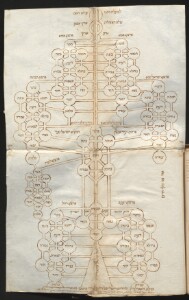
Mantua (Italy), Jewish Community of Mantua: Ms. ebr. 108 (2)
ID: https://ilanot.org/resource/item/diagram_00447

Oxford (England), Bodleian Library: MS Opp. 105
ID: https://ilanot.org/resource/item/diagram_00450
Begin Your Journey
Join researchers worldwide in exploring the mystical diagrams that have guided spiritual seekers for centuries.
About Maps of God
"Maps of God" (MoG) is the flagship digital humanities initiative of the Ilanot Project, dedicated to the research of Jewish kabbalistic diagrams known as ilanot ("trees," being intricately inscribed parchment scrolls dedicated to mapping the divine realm).
The MoG platform presents scientific editions of the great ilanot using an innovative linked-data approach to enable scholars and laypeople to explore these fascinating artifacts for the first time.
Please note: This site was created for internal use and is open to the general public as a courtesy. The development and implementation of the feature-rich end-user site is currently underway and is expected to be completed by 2024.
Development funded by the Volkswagen Foundation and basic research funded by Israel Science Foundation Personal Grant 1568/18.